
Table of contents
- Introduction: Bitcoin as a Payment Method
- Why Merchants Accept Bitcoin
- Lower Transaction Fees
- Elimination of Chargebacks
- Global Accessibility
- Privacy and Security
- Marketing and Differentiation
- Types of Bitcoin Payment Solutions
- 1. Payment Processors (Managed Solutions)
- 2. Direct Acceptance (DIY)
- 3. Point-of-Sale Systems
- Implementation Guide
- Step 1: Choose Your Solution
- Step 2: Integration
- Step 3: Pricing Strategy
- Step 4: Customer Experience
- Step 5: Staff Training
- Accounting and Tax Considerations
- Record Keeping
- Tax Treatment (United States)
- International Considerations
- Accounting Software Integration
- Managing Volatility
- Immediate Conversion
- Partial Hold Strategy
- Full Hold (Bitcoin Standard)
- Legal and Regulatory Compliance
- Money Transmitter Licenses
- KYC/AML Obligations
- Consumer Protection
- Best Practices and Tips
- 1. Start Small
- 2. Clear Communication
- 3. Optimize for Mobile
- 4. Monitor and Adjust
- 5. Security
- Case Studies
- Small Business: Local Coffee Shop
- E-Commerce: Online Electronics Store
- Service Business: Web Development Agency
- Common Challenges and Solutions
- Challenge: Price Volatility
- Challenge: Customer Confusion
- Challenge: Accounting Complexity
- Challenge: Low Adoption
- The Future of Bitcoin Payments
- Lightning Network Maturation
- Integration with Traditional Payment Systems
- Regulatory Clarity
- Conclusion: Bitcoin as Mainstream Payment Rails
Introduction: Bitcoin as a Payment Method
For over a decade, Bitcoin has evolved from an experimental digital currency to a legitimate payment method accepted by businesses worldwide — from small coffee shops to Fortune 500 companies. As of 2025, major merchants like Microsoft, Overstock, Newegg, and thousands of smaller businesses accept Bitcoin payments, processing billions in transaction volume annually.
Accepting Bitcoin offers merchants distinct advantages: lower payment processing fees, instant global reach, elimination of chargebacks, and access to a financially sophisticated customer base. However, it also introduces new considerations around volatility, technical integration, regulatory compliance, and operational processes.
This comprehensive guide covers everything merchants need to know about accepting Bitcoin: from choosing the right payment solution to handling accounting, managing tax obligations, and optimizing the customer experience.
Why Merchants Accept Bitcoin
Lower Transaction Fees
The economics of payment processing represent a significant cost burden for most merchants. Traditional payment rails extract 2-4% of every transaction, with credit card processors charging 2.5-3.5% plus $0.30 fixed fees per transaction. International credit cards are even more expensive, extracting 3.5-4% plus opaque currency conversion spreads that can add another 1-3% to the total cost. Add chargebacks — which cost $15-100 per dispute regardless of outcome — and the true cost of traditional payment acceptance becomes staggering.
Bitcoin payment processors operate on fundamentally different economics. With typical fees of 1% or less and no fixed per-transaction charges, Bitcoin payments cost a fraction of traditional alternatives. More importantly, Bitcoin payments eliminate entire categories of costs that merchants simply accept as unavoidable with legacy payment systems.
Chargebacks represent billions in annual losses for merchants globally. Bitcoin’s irreversible transactions eliminate this fraud vector entirely — once a payment confirms on the blockchain, it cannot be disputed or reversed by banks. There are no currency conversion fees because Bitcoin is a native global currency, eliminating the hidden spreads that payment processors and banks extract on cross-border transactions.
For high-volume merchants processing millions in transactions annually, the savings compound dramatically. A restaurant chain processing $10 million in credit card payments annually pays $250,000-350,000 in fees. The same volume through Bitcoin processors would cost $100,000 or less — a savings of $150,000-250,000 annually. For international e-commerce businesses, where cross-border fees and chargebacks are particularly painful, Bitcoin’s cost advantages become even more compelling.
Elimination of Chargebacks
Chargebacks represent one of the most insidious costs in retail commerce, extracting billions from merchants annually while tilting the playing field dramatically in favor of dishonest customers. The traditional banking system allows customers to dispute charges months after purchase, forcing merchants to defend against claims of non-delivery or dissatisfaction — regardless of actual facts. Merchants lose not only the disputed amount but also face $15-100 in processing fees per chargeback, even when they successfully defend their case.
Bitcoin fundamentally eliminates this problem. Transactions are cryptographically final once confirmed on the blockchain — no bank, payment processor, or customer can reverse the payment. This eliminates chargeback fraud entirely, where unscrupulous customers claim non-delivery despite receiving goods. The operational burden of managing disputes, collecting evidence, and responding to chargeback claims disappears.
For businesses selling digital goods, adult content, or other “high-risk” categories that face elevated chargeback rates, Bitcoin acceptance can be transformative. Payment processors often refuse these businesses entirely or charge 5-8% fees to compensate for chargeback risk. Bitcoin provides these merchants access to payment processing at fair rates without discrimination based on industry vertical.
Important note: While Bitcoin transactions themselves are irreversible, payment processors may voluntarily offer refunds as customer service. This represents a merchant choice rather than bank-enforced chargebacks — giving control back to the merchant where it belongs.
Global Accessibility
Traditional payment systems trap merchants within jurisdictional boundaries. Accepting credit cards from international customers requires merchant accounts in each country, navigating different regulations, and paying elevated foreign transaction fees. Currency conversion spreads silently extract 2-3% from every cross-border transaction, often hidden in exchange rate markups that neither merchant nor customer fully understands.
Bitcoin transcends these artificial boundaries entirely. A merchant in Texas can accept payment from a customer in Thailand with the same ease as a local transaction — no international merchant accounts, no foreign transaction fees, no currency conversion spreads. The payment settles on the Bitcoin network within minutes regardless of geographic distance, with the same transparent fee structure whether transacting across the street or across oceans.
This opens markets that were previously inaccessible to many merchants. Two billion people globally lack access to traditional banking systems but can hold Bitcoin through mobile phones. By accepting Bitcoin, merchants can serve this unbanked population, accessing markets in developing economies where credit card penetration remains low but smartphone adoption is near-universal. The settlement speed remains constant — unlike international wires that can take 3-5 days and cost $25-50, Bitcoin settles in under an hour with minimal fees.
Privacy and Security
The credit card system requires merchants to collect, store, and secure sensitive customer financial data. This creates massive liability: merchants must comply with PCI-DSS standards (a complex, expensive compliance regime), invest in secure infrastructure, and face catastrophic risk if breached. Data breaches expose customer credit card numbers, potentially costing merchants millions in fines, remediation, and reputational damage.
Bitcoin eliminates these concerns entirely. Merchants never handle sensitive financial data — a Bitcoin address reveals nothing about customer identity, financial status, or payment credentials. There’s no credit card data to secure, no PCI compliance requirements to meet, no devastating breach liability. The merchant simply receives irreversible Bitcoin payments without ever touching information that could be stolen or misused.
This reduced attack surface makes merchants less attractive targets for hackers. Rather than databases of credit card numbers worth millions on dark web markets, Bitcoin-accepting merchants hold only transaction histories that are already public on the blockchain. The security model shifts from protecting valuable secrets to simply securing private keys — a simpler, more manageable security posture.
Marketing and Differentiation
In crowded markets, Bitcoin acceptance provides meaningful differentiation. Tech-savvy early adopters actively seek businesses that accept Bitcoin, viewing it as a signal of innovation and forward-thinking management. These customers tend to be higher-value: Bitcoin holders often have significant purchasing power and preference for businesses that respect their monetary sovereignty.
The publicity value can be substantial, particularly for local businesses. “Local Coffee Shop Accepts Bitcoin” generates press coverage in both local media and cryptocurrency publications, providing free marketing to engaged audiences. This positions the brand alongside innovation, financial freedom, and technological sophistication — associations that resonate with desirable customer demographics.
As Bitcoin adoption grows, early merchant adopters build competitive moats. Customers who prefer Bitcoin payments will preferentially choose businesses that accommodate them, creating loyalty that transcends price competition. The brand alignment with Bitcoin’s values — sovereignty, censorship resistance, sound money — attracts customers who share these principles and reward businesses that support the ecosystem.
Types of Bitcoin Payment Solutions
1. Payment Processors (Managed Solutions)
Full-service providers that handle Bitcoin complexity for you:
BTCPay Server (Self-Hosted, Free, Open-Source)
BTCPay Server represents the sovereignty-maximizing option for merchants who value complete control. This free, open-source solution eliminates all intermediaries — you maintain full self-custody of Bitcoin with no third-party involvement. The software provides comprehensive merchant features including invoicing, point-of-sale functionality, and ready-made plugins for major e-commerce platforms like WooCommerce, Shopify, and PrestaShop. However, this independence comes with technical requirements: merchants must operate their own server and Bitcoin node, making BTCPay best suited for tech-savvy merchants who prioritize sovereignty over convenience.
BitPay
BitPay pioneered Bitcoin payment processing and remains the largest provider, offering established businesses a turnkey solution. The service charges 1% on standard plans with custom enterprise pricing available for high-volume merchants. BitPay’s key advantage is instant BTC-to-USD conversion, eliminating volatility exposure entirely for risk-averse merchants. Comprehensive features include e-commerce integrations across all major platforms, mobile apps for on-the-go management, professional invoicing tools, and streamlined refund processing. The tradeoff: BitPay operates as a custodial service with standard KYC/AML requirements, making it best suited for established businesses comfortable with regulatory compliance.
Coinbase Commerce
Coinbase Commerce bridges simplicity and self-custody, charging 1% for fiat conversions while offering free Bitcoin-only processing. Unlike traditional Coinbase services, Commerce operates non-custodially — merchants control their private keys directly, maintaining Bitcoin sovereignty. The platform provides straightforward integration and supports multiple cryptocurrencies beyond Bitcoin, appealing to merchants wanting flexible digital asset acceptance. Best suited for small to medium businesses and e-commerce operations, Commerce requires a Coinbase account but delivers more autonomy than fully custodial alternatives.
Strike
Strike leverages Lightning Network technology to offer the lowest-cost payment processing, providing completely free merchant services powered by instant, negligible-fee Lightning transactions. The platform’s killer feature is instant USD settlement — merchants receive dollars immediately while customers pay with Bitcoin or Lightning, with Strike handling conversion invisibly. This eliminates volatility risk entirely without charging merchant fees. Currently US-focused with global expansion underway, Strike proves ideal for high-volume, low-margin businesses where traditional payment processing fees significantly impact profitability.
2. Direct Acceptance (DIY)
Direct acceptance eliminates intermediaries entirely, with merchants accepting Bitcoin directly to self-custodied wallets. This maximalist approach offers maximum sovereignty and zero third-party fees but requires technical competence and operational discipline.
Hardware Wallet + Mobile App
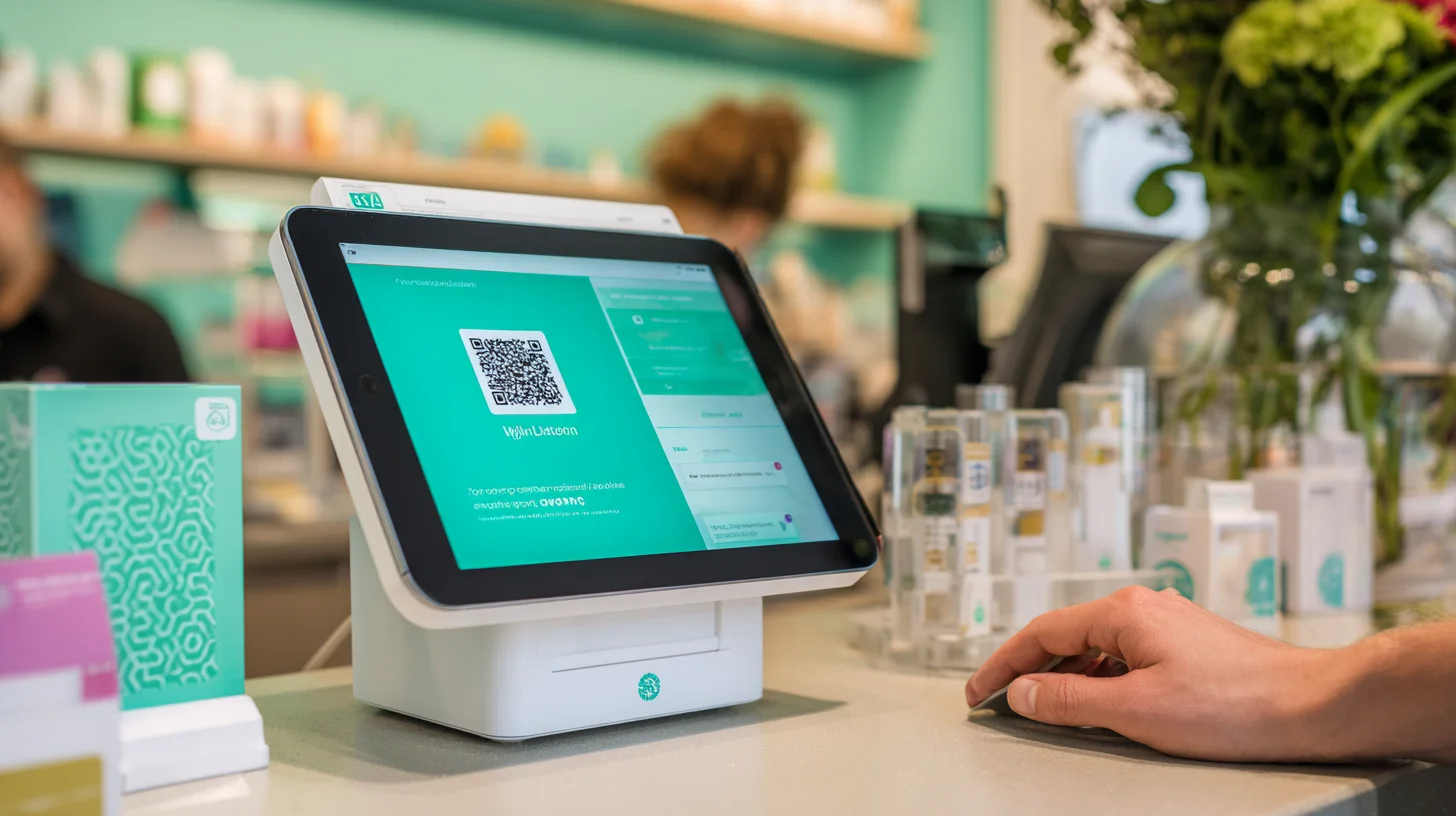
The simplest direct acceptance method pairs a hardware wallet for secure storage with mobile wallet software for generating payment addresses. For each customer transaction, generate a unique Bitcoin address from your wallet, display it as a QR code for the customer to scan, and monitor the blockchain for payment confirmations before releasing goods or services. Accounting and tax reporting must be handled manually — tracking each transaction, recording values at time of receipt, and maintaining documentation for tax authorities.
This approach suits very small businesses or merchants with occasional Bitcoin sales where simplicity outweighs automation needs. A coffee shop accepting one or two Bitcoin payments weekly can manage this manually; a busy online store processing dozens of daily transactions cannot. The operational overhead becomes prohibitive at scale without automated invoice generation, payment tracking, and accounting integration.
Lightning Network Node
Running your own Lightning node represents the most sovereign approach for merchants requiring instant, low-fee payments. Your node connects directly to the Lightning Network, accepting payments through your own payment channels without relying on custodial services or payment processors. This provides instant settlement (payments confirm in under a second), negligible fees (often under a penny regardless of amount), and complete control over funds.
The technical requirements are substantial. Node operation demands managing channel liquidity, maintaining inbound capacity to receive payments, monitoring node uptime and connectivity, and handling channel closures and rebalancing. Solutions like BTCPay Server can simplify some operational complexity, but Lightning node management remains demanding compared to traditional payment processor relationships. This approach best suits technically sophisticated merchants with high transaction volumes where the fee savings and sovereignty benefits justify the operational complexity — think online services processing hundreds of small payments daily rather than brick-and-mortar stores with occasional sales.
3. Point-of-Sale Systems
Brick-and-mortar retailers need point-of-sale systems optimized for in-person transactions. BTCPay POS offers a free, self-hosted solution with complete customization — you control everything from branding to payment flows, though you assume hosting and maintenance responsibilities. BitPay’s mobile app provides instant deployment via smartphones or tablets, ideal for merchants wanting to accept Bitcoin today without infrastructure investment. For high-volume retailers, specialized blockchain POS terminals integrate Bitcoin acceptance directly into existing checkout workflows alongside traditional payment methods, though these dedicated devices come with higher upfront costs and vendor lock-in considerations.
Implementation Guide
Step 1: Choose Your Solution
Your solution choice hinges on several critical factors. Technical capability determines whether you can self-host infrastructure or need managed services — BTCPay requires server administration skills while processors like Coinbase Commerce abstract complexity entirely. Transaction volume matters economically: high-volume merchants benefit dramatically from low-percentage or flat-fee arrangements, while occasional sellers might prefer simplicity over fee optimization. Volatility tolerance shapes your keep-versus-convert decision — Bitcoin maximalists hold payments while risk-averse treasurers immediately convert to fiat. Custody preference reflects your security philosophy: self-custody demands operational discipline but eliminates counterparty risk, while custodial solutions trade security control for operational simplicity. Finally, compliance requirements vary by jurisdiction — larger merchants may face KYC/AML obligations that constrain solution choices, particularly for instant fiat conversion services.
Step 2: Integration
E-Commerce Platforms
Most processors offer plugins for:
- WooCommerce (WordPress): BTCPay, BitPay, Coinbase Commerce plugins
- Shopify: BitPay, Coinbase Commerce apps
- Magento: BitPay extension
- PrestaShop: Multiple Bitcoin payment modules
- Custom/API: REST APIs for custom integrations
Integration Steps (Example: BTCPay)
- Install BTCPay Server (self-hosted or use third-party host)
- Create a store in BTCPay dashboard
- Generate API key
- Install WooCommerce plugin (or relevant platform plugin)
- Enter API key and configure settings
- Test with small transaction
Step 3: Pricing Strategy
Option A: Static Fiat Pricing
Most merchants display prices in familiar fiat currency (USD, EUR, etc.) and convert to Bitcoin at payment time using current exchange rates. This approach feels familiar to customers who think in traditional currency terms, provides predictable revenue in fiat terms regardless of Bitcoin price movements, and simplifies accounting when most expenses remain denominated in fiat. The tradeoff: you need reliable real-time exchange rate data feeds, creating dependency on pricing APIs and requiring invoice expiration times (typically 15 minutes) before exchange rates refresh.
Option B: Static BTC Pricing
Bitcoin-native merchants can set prices directly in Bitcoin — for example, 0.0001 BTC for a coffee:
- Pros: True Bitcoin-native pricing
- Cons: Customers unfamiliar with BTC amounts, volatility affects margins
Option C: Hybrid with Discounts
Fiat pricing with 5-10% discount for Bitcoin payments:
- Pros: Incentivizes Bitcoin use, shares fee savings
- Cons: More complex pricing structure
Step 4: Customer Experience
Checkout Flow
- Customer selects “Pay with Bitcoin” at checkout
- System generates invoice with:
- Bitcoin amount (dynamic, based on current exchange rate)
- Unique payment address or Lightning invoice
- QR code for mobile wallet scanning
- Copy-paste text for desktop wallets
- Countdown timer (typically 15 minutes)
- Customer sends payment from their wallet
- System detects payment (instant for Lightning, ~10 seconds for on-chain)
- Order confirmed after appropriate confirmations (0-2 for small amounts, 3-6 for large)
Confirmation Times
- Zero confirmations: Instant detection, suitable for small amounts (<$100)
- 1 confirmation (~10 min): Suitable for most retail ($100-$1,000)
- 3 confirmations (~30 min): Standard for larger amounts ($1,000-$10,000)
- 6 confirmations (~60 min): High-value transactions (>$10,000)
Lightning Network Alternative
Lightning Network payments:
- Confirm in <1 second
- Cost 1-10 satoshis regardless of amount
- Perfect for retail, hospitality, and frequent transactions
- Requires Lightning setup (easier with managed providers like Strike)
Step 5: Staff Training
Educate staff on:
- What is Bitcoin: Basic understanding, not expert knowledge
- How to process payments: Generate invoice, show QR code, confirm payment
- Confirmation times: When to release goods/services
- Troubleshooting: What if payment doesn’t arrive? (Check mempool, wait longer, contact customer)
- Refund process: How to issue Bitcoin refunds if needed
Accounting and Tax Considerations
Record Keeping
Maintain detailed records for each transaction:
Comprehensive record-keeping captures: date and time of payment establishing timeline, BTC amount received documenting the cryptocurrency quantity, USD value at time of receipt providing the tax-relevant fair market value, transaction ID (txid) enabling blockchain verification, customer identifier linking payment to order or invoice, and product or service sold connecting the transaction to business operations. Most payment processors simplify this burden by providing CSV exports formatted for accounting software, automating much of the documentation requirement while ensuring compliance with tax record-keeping obligations.
Tax Treatment (United States)
Revenue Recognition
IRS treats Bitcoin as property, not currency. Revenue is recognized at fair market value (USD) at time of receipt:
Revenue = BTC_received × USD_price_at_receiptCapital Gains
If you hold Bitcoin and later sell/spend:
Capital_gain = Sale_price - Cost_basisExample:
- Receive 0.01 BTC as payment when BTC = $50,000 → Revenue = $500
- Hold for 6 months, BTC rises to $60,000
- Sell 0.01 BTC → Capital gain = $600 - $500 = $100 (taxable)
Immediate Conversion Strategy
Many merchants immediately convert BTC to USD to avoid:
Many merchants immediately convert Bitcoin to USD primarily to avoid price volatility risk — preventing situations where Bitcoin revenue declines 20% before conversion to operating currency. Immediate conversion also eliminates capital gains tracking complexity, converting Bitcoin accounting into straightforward revenue recognition without subsequent disposition tracking. Finally, it avoids potential tax liability on appreciation: Bitcoin that increases in value between receipt and eventual sale creates taxable capital gains that immediate conversion prevents entirely.
International Considerations
International tax treatment generally applies familiar principles. VAT and sales tax in most jurisdictions treat Bitcoin payments identically to any currency — VAT applies to the underlying goods or services sold, not the Bitcoin payment mechanism itself. European Union court rulings specifically exempt Bitcoin from VAT on currency exchanges, clarifying that accepting Bitcoin doesn’t create VAT liability beyond what fiat acceptance would. Various countries impose cryptocurrency transaction reporting requirements above certain thresholds, requiring merchants to monitor and report large Bitcoin payments to financial authorities, similar to cash transaction reporting in traditional commerce.
Accounting Software Integration
Integrate with accounting platforms:
Accounting software integration streamlines record-keeping. QuickBooks users can integrate via BitPay’s native plugin or manually import CSV transaction exports. Xero supports cryptocurrency through third-party plugins designed specifically for digital asset accounting. Custom integrations export transaction data from payment processors and import as journal entries into any accounting system, maintaining flexibility for organizations using specialized accounting software or enterprise resource planning (ERP) systems.
Managing Volatility
Immediate Conversion
Most risk-averse approach:
- Payment processor converts BTC to USD instantly
- Merchant receives fiat settlement
- Zero price risk
- Fees: ~1% conversion fee
Partial Hold Strategy
Hybrid approach:
- Convert 80% to USD for operating expenses
- Hold 20% in BTC as long-term savings/speculation
- Balances volatility risk with potential upside
Full Hold (Bitcoin Standard)
Some merchants embrace full Bitcoin standard:
- Keep all Bitcoin received
- Pay suppliers in Bitcoin when possible
- Only convert BTC to fiat as needed for fiat-only expenses
- Requires belief in long-term Bitcoin appreciation
Legal and Regulatory Compliance
Money Transmitter Licenses
Generally not required for merchants who:
- Accept Bitcoin as payment for goods/services
- Don’t exchange Bitcoin for fiat on behalf of customers
- Don’t operate as a payment intermediary
May be required if you:
- Act as a payment processor for other merchants
- Exchange Bitcoin for customers as a service
Consult legal counsel for your specific jurisdiction and business model.
KYC/AML Obligations
Most merchants have no KYC/AML requirements just for accepting Bitcoin. Obligations apply if:
- Your business already has KYC requirements (financial services)
- Transactions exceed reporting thresholds ($10,000+ in US)
- You operate as money transmitter
Consumer Protection
Standard consumer protection laws apply:
- Product warranties and guarantees
- Truth in advertising
- Refund policies (though Bitcoin payments aren’t automatically reversible)
Best Practices and Tips
1. Start Small
- Pilot with online store before in-person retail
- Limit Bitcoin payments to small test group
- Gain experience before full rollout
2. Clear Communication
- Display “Bitcoin Accepted Here” signage prominently
- Explain confirmation times to customers
- Set clear refund policy
- Provide customer support for payment issues
3. Optimize for Mobile
- Ensure QR codes are large, scannable
- Test checkout on various mobile wallets
- Consider Lightning for better mobile experience
4. Monitor and Adjust
- Track Bitcoin payment adoption rate
- Survey customers about experience
- Adjust confirmation requirements based on risk/speed tradeoff
- Optimize fees and settlement preferences
5. Security
- Use hardware wallets for large balances
- Implement multisig for business wallets
- Regularly backup wallet seeds
- Separate hot (operational) and cold (savings) wallets
Case Studies
Small Business: Local Coffee Shop
Solution: BTCPay Server with Lightning Network Results:
- 5% of transactions in Bitcoin (early adopter customers)
- Average ticket: $8, instant Lightning confirmations
- Saved ~$150/month on payment processing fees
- Generated local press coverage
E-Commerce: Online Electronics Store
Solution: BitPay integration with WooCommerce Results:
- 2% of revenue from Bitcoin payments
- Average order value: $500 (tech-savvy customers)
- Eliminated chargebacks on Bitcoin orders
- Expanded to international customers without additional merchant accounts
Service Business: Web Development Agency
Solution: Direct Bitcoin acceptance, 50% converted to USD, 50% held Results:
- 10% of clients pay in Bitcoin
- Higher-value contracts ($5,000-$50,000)
- Bitcoin treasury appreciated 40% during holding period
- Attracted international clients avoiding wire transfer fees
Common Challenges and Solutions
Challenge: Price Volatility
Solution:
- Use instant conversion to USD
- Set payment window (15 minutes) to lock in price
- Consider Lightning Network for instant settlement
Challenge: Customer Confusion
Solution:
- Provide clear, simple instructions
- Offer staff assistance for first-time Bitcoin payers
- Create FAQ page addressing common questions
Challenge: Accounting Complexity
Solution:
- Use payment processor with accounting exports
- Hire accountant familiar with cryptocurrency
- Consider immediate conversion to simplify tax treatment
Challenge: Low Adoption
Solution:
- Offer Bitcoin-exclusive discounts
- Market to Bitcoin community (Bitcoin Magazine, Twitter/X, Reddit)
- Attend Bitcoin meetups and conferences
The Future of Bitcoin Payments
Lightning Network Maturation
As Lightning infrastructure improves:
- Instant, nearly-free payments become standard
- Better user experience (no confirmation waits)
- Enables micropayments (pay-per-article, streaming money)
Integration with Traditional Payment Systems
- Visa/Mastercard Bitcoin payment cards
- Banks offering Bitcoin merchant services
- Point-of-sale systems with native Bitcoin support
Regulatory Clarity
- Clearer tax guidance
- Standardized accounting treatments
- Reduced compliance uncertainty
Conclusion: Bitcoin as Mainstream Payment Rails
Accepting Bitcoin payments is no longer an experimental curiosity — it’s a pragmatic business decision offering tangible benefits: lower fees, global reach, elimination of fraud, and access to a growing customer base.
The technical barriers have largely been solved. Modern payment processors make Bitcoin acceptance as simple as integrating any payment gateway. Accounting and tax treatment, while requiring attention, is well-understood and supported by professionals.
For businesses willing to embrace financial innovation, Bitcoin payments represent an opportunity to reduce costs, expand markets, and align with the future of money. Whether you convert instantly to fiat or embrace the Bitcoin standard, the infrastructure exists today to make Bitcoin a seamless part of your payment stack.
The question is no longer “Can we accept Bitcoin?” but rather “Why wouldn’t we?”
Topics in this guide
- merchants
- payments
- business
Use what you learned
Choose the Byte Federal product that fits your next step.