
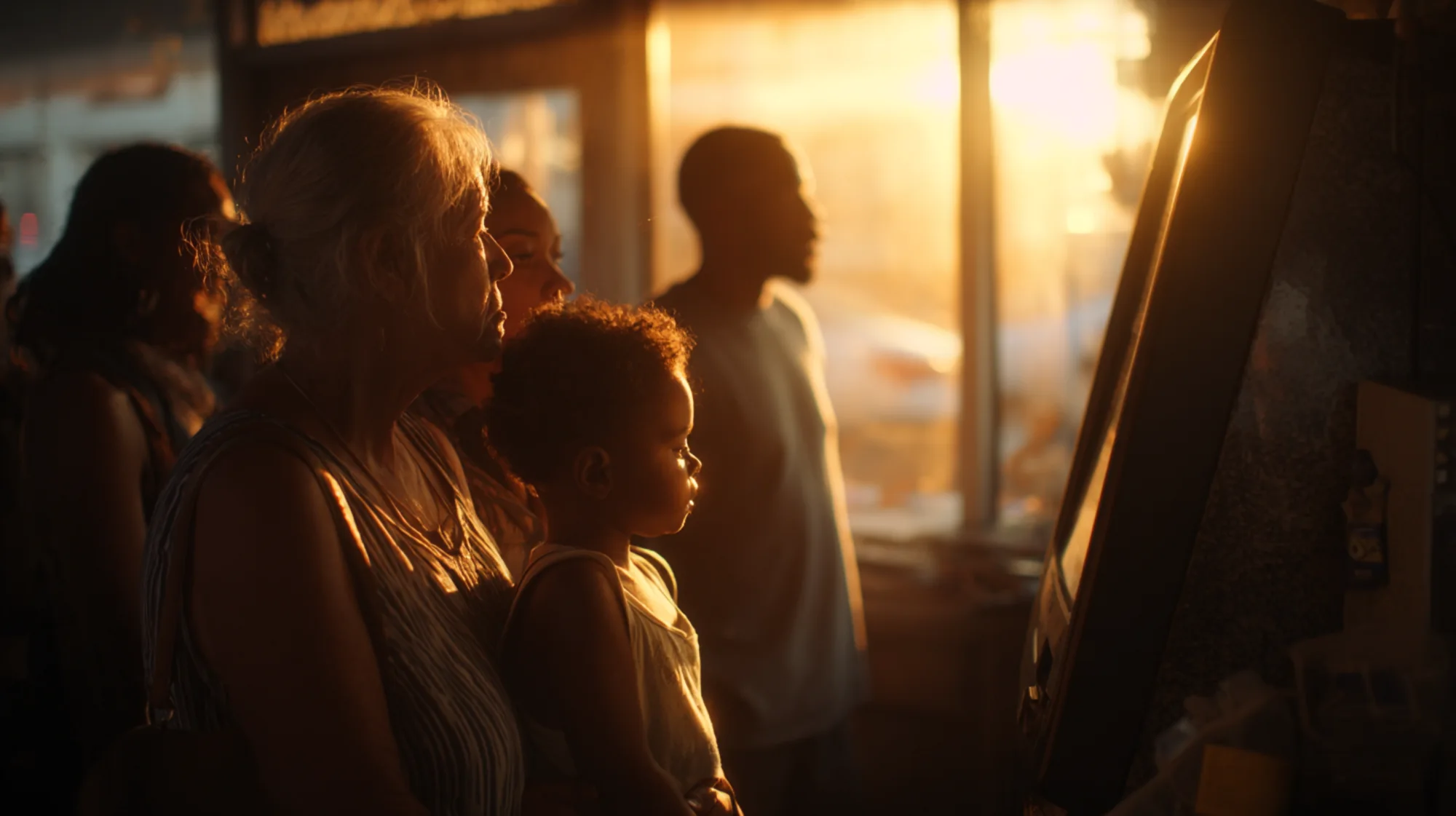
A 30-second letter can stop this
Indiana banned it.
Tennessee banned it.
Minnesota banned it.
The scammers didn't even blink. Banning Bitcoin ATMs doesn't stop fraud — it just shuts one of the few savings doors left to the people the banks already turned away.
Already banned · more bills are coming
The scam starts with a phone call.
Not a machine.
Overseas call centers spin up for about $100. The Bitcoin ATM is the last step of a five-step con — and the only step lawmakers are trying to ban. Take it away and the scammer just uses gift cards, wires, or cash by mail. The victim still loses. Nothing is fixed.
Want to find the fraud?
Follow the money.
Where Americans' fraud losses actually move — U.S., 2024 (FTC · FBI IC3 · CFPB · Federal Reserve)
The biggest fraud rails in America are the banks' own — wires, Zelle, checks. And nobody is banning those.
Who wins when the corner store loses?
The CFPB sued JPMorgan Chase, Bank of America, and Wells Fargo in 2024 over fraud losses on Zelle, the banks' own payment network.
Of the largest banks have no public policy for what even counts as an "unauthorized" transaction — so their own scam victims often get nothing back.
Place a cash customer can go when the corner-store option disappears: back to the bank that skipped their neighborhood.
Banks are being sued for enabling fraud. Bitcoin ATMs — among the most regulated cash businesses in the country — are being banned for it. When new competition is the thing that gets outlawed, it is worth asking who actually benefits.
The collateral damage has a zip code
A Bitcoin ATM's customers are nearly twice as Black as America itself — 22.6% vs 12.1% of the population, measured with the CFPB's own fair-lending method, not a guess.
Black households are the largest unbanked population in the country: 10.6% have no bank account, against 1.9% of white households. The neighborhood doesn't pick the machine — the machine ends up where the banks never went.
More fraud runs through the banks, and the banks stay open. The one cash-to-savings door that disadvantaged neighborhoods actually use gets shut down — knowing full well it won't stop a single overseas scammer.
That is the textbook definition of disparate impact: a policy that lands hardest on the communities traditional banking already left behind. There is a name for drawing that line. Digital redlining.
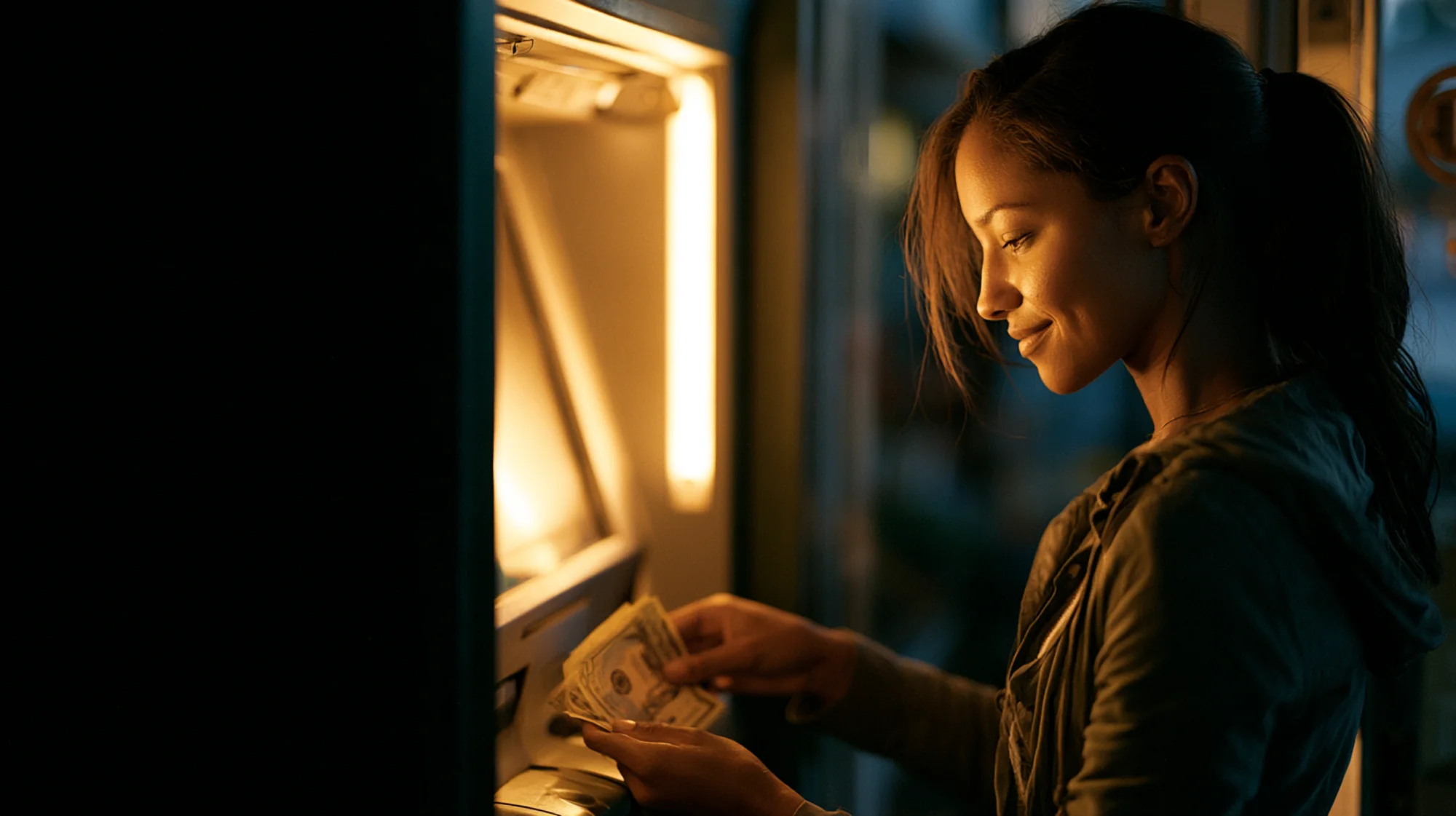
For her, it isn't an investment account.
It's a savings plan she can actually reach.
At a gas station, between the lottery tickets and the energy drinks, a Bitcoin ATM lets someone with no bank account put away $20 at a time.
No minimum balance. No credit check. No branch that closed in 2019. A little, set aside on her own terms, that she owns outright — the same way someone with a brokerage account stacks savings, a few dollars at a time.
It is one of the few ways the people the banking system skipped have started to build something over the years. Take the machine away and you don't protect her. You strand her.
Watch
Byte Federal CEO Paul Tarantino on Bitcoin ATMs and financial access
30 seconds. One letter.
Tell your lawmakers the truth: stop the scam at the phone, not at the people who finally have a way to save. It's free, it's non-partisan, and it takes less time than this page did to read.
Send Your Letter →Powered by the Satoshi Action Fund · Free · Non-partisan
Share this
Sources: FTC Consumer Sentinel Data Book 2024; FBI Internet Crime Complaint Center (IC3) 2024; CFPB v. Early Warning Services, Bank of America, JPMorgan Chase & Wells Fargo (Dec 2024); Federal Reserve FRFS Risk Officer Survey 2024; Chainalysis; Byte Federal fraud-prevention and financial-inclusion research. Bank-level fraud figures are documented federal filings and modeled estimates, not audited per-institution disclosures. Read the deeper analysis on our Fraud Prevention page and in Who Really Uses Bitcoin ATMs? Powered by Byte Federal & the Satoshi Action Fund. Non-partisan. Free.