
Bitcoin scams and fraud prevention
How the scams that target Bitcoin users work, from fake support calls to pig butchering, and how to stop a payment before it is sent.
Most bitcoin losses do not come from broken cryptography. They come from people being talked into sending money: a caller posing as a bank or a government agency, an online romance that turns into an investment pitch, a message that looks like it came from a wallet provider. Bitcoin payments are hard to reverse once they confirm, so the moment to stop a scam is before the money moves.
These guides explain how the common scams work, the warning signs that show up in each one, what Bitcoin ATM operators and lawmakers are doing about them, and what to do if you or someone you know has already sent money. They are written for people who use Bitcoin and for the family members who help them.
16 articles on scams and fraud
-
 beginner
Check only the ends? That's what address poisoning counts on
Address poisoning plants a lookalike that matches the first and last characters of an address you use. How it and two other swaps work, and how to catch them.
Read article -
 beginner
Can bitcoin be traced? The FBI tracked down $2.3M in ransom
Every bitcoin payment sits on a public ledger. How the FBI tracked a $2.3M ransom, where a wallet gets a name, and what to do if a scammer took yours.
Read article -
 beginner
Can you send money through a Bitcoin ATM? Yes, with no undo
Can you send money through a Bitcoin ATM? Yes, but it arrives as bitcoin in the wallet you scan, and nobody can pull it back. One rule says when to stop.
Read article -
 beginner
Crypto phishing: why the scam message knows your name and balance
Crypto phishing messages now carry your real name, address and balance, taken in leaks at Coinbase, Ledger and Gnosis Pay. Check any message in 3 steps.
Read article -
 beginner
Bitcoin ATM asking for your ID? Here's why, and who keeps it
Do bitcoin ATMs require ID? Yes. Federal rules make operators verify customers. See the $2,000, $3,000 and $10,000 triggers and who keeps your ID.
Read article -
 beginner
Got a 'wrong number' text from a friendly stranger? Read this
A wrong-number text can be step one of a pig butchering scam. Americans reported $7.2 billion in crypto investment fraud losses to the FBI in 2025.
Read article -
 case study
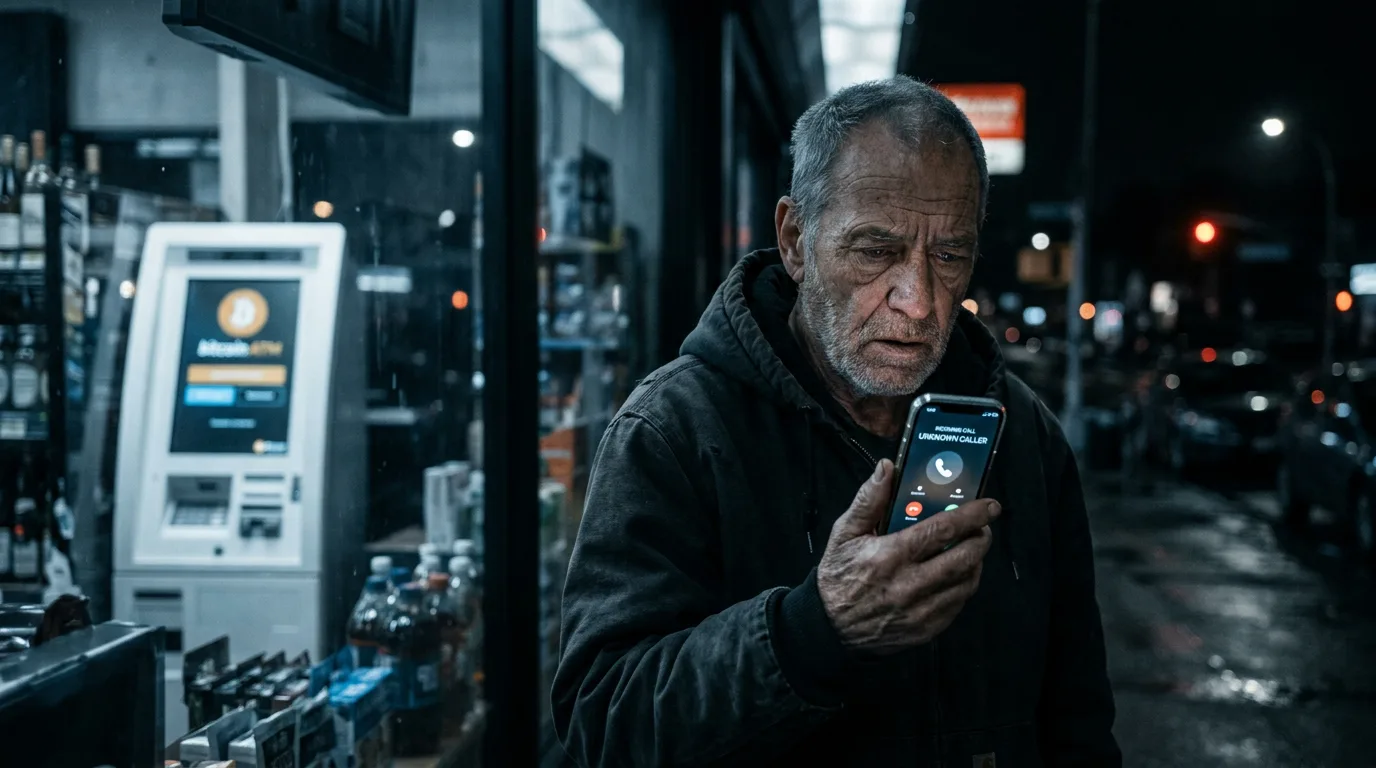
The Scam Doesn't Start at the Kiosk: Why Crypto-ATM Laws Keep Missing Where Fraud Begins
Wisconsin, Indiana, and a dozen other states are writing laws to stop crypto-ATM fraud -- almost all of them regulate the last ninety seconds of the crime and ignore the hour before it. The FTC says these scams start with a phone call. The kiosk is the finish line, not the starting gun. A look at where the fix actually lives.
Read article -
 case study
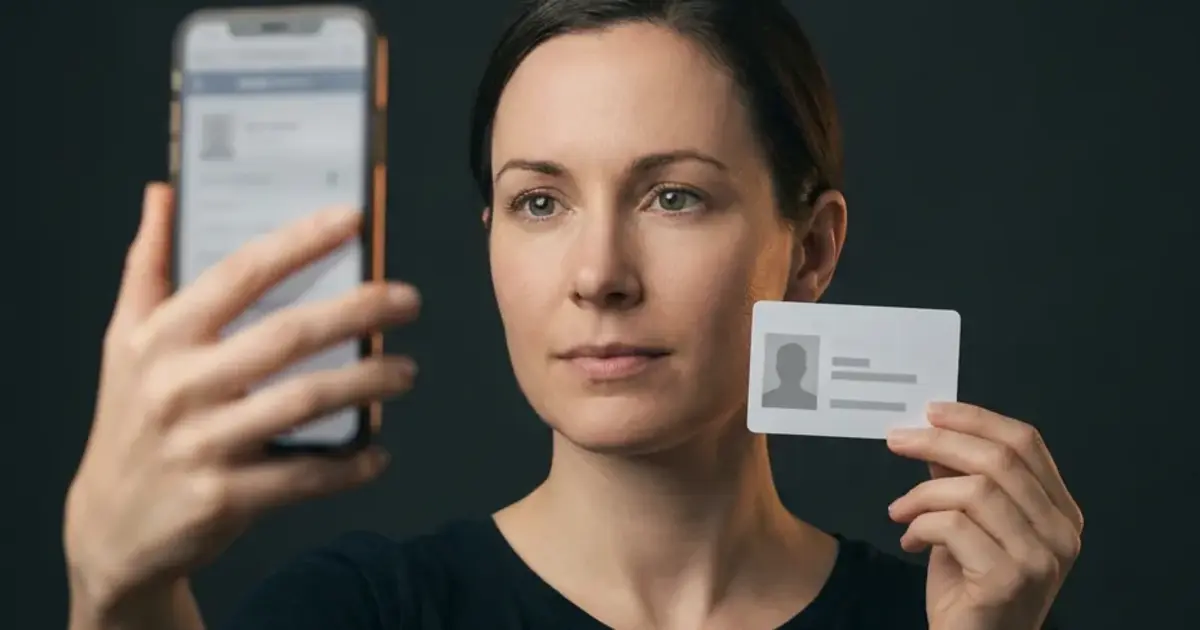
Nobody Ever Saw the Person: The One Thing Every Online Scam Has in Common
Investment, imposter, romance and tech-support scams cost Americans more than $12 billion in 2024, and every one of them depends on a single condition: the victim never confirmed that a live human was on the other side. A look at the check commerce used to run by default, and why the internet never replaced it.
Read article -
 case study
Bitcoin ATM Scam Facts: Why Bans Hurt the People Who Need Them Most
The plain-language facts on Bitcoin ATM bans: they don't stop scams, the banks' own rails carry far more fraud, and bans cut the 24.6 million unbanked Americans — disproportionately Black, Hispanic, and Native families — off from one of the few ways they have to save. Stop the scam at the phone, not the people.
Read article -
 case study
Following the Money: America's 2024–2025 Bank Fraud Report
A sourced look at where fraud losses in America actually go. FTC, FBI, CFPB, and Federal Reserve data show the money moves through the banks' own rails — wires, Zelle, checks, and cards — far more than through any newer channel. To stop a scam, follow the money to its source.
Read article -
 case study
Hard Money Has No Refund: The Misunderstanding at the Heart of the Bitcoin ATM Debate
No one demands a coin dealer replace stolen gold, or lets police into a bank vault on a phone complaint. So why are Bitcoin ATM operators asked to "refund" irreversible transactions they did not cause and cannot reverse? A close look at hard money, fraud liability, and the law we already wrote.
Read article -
 case study
Australia's $50 Million Precedent: Targeting Scams Where They Start!
Australia just legislated $50 million fines for banks, telcos, and social media platforms that fail to stop scams. It is a landmark shift toward "whole-of-ecosystem" accountability that proves why targeting individual financial tools like Bitcoin ATMs is a failed strategy.
Read article -
 case study
AARP's Own Data Proves Bitcoin ATM Bans Are Wrong: The 82% Gift Card Lesson
AARP's April 2026 fraud research found 82% of Americans recognize gift card scams but only 19% recognize Bitcoin ATM scams. AARP is using this to argue for prohibition. The data actually proves the opposite: education works. Gift card recognition was near zero a decade ago — no ban was required. Here is why the same approach will work for cryptocurrency kiosks, with full citations to AARP, FBI, FTC, and FDIC sources.
Read article -
 case study
Who Really Uses Bitcoin ATMs? The Communities the Headlines Miss
Federal Reserve data shows most Bitcoin ATM users are unbanked minorities and immigrants using the machines for remittances — not speculation. Here is the evidence-backed story that mainstream coverage consistently gets wrong.
Read article -
 beginner
Is Your Bitcoin ATM Safe? How Fraud Prevention Really Works
Learn how Bitcoin ATM scams actually work, what Byte Federal does to prevent fraud with a 5-layer defense system, and how to protect yourself from common scam tactics.
Read article - beginner
Avoiding Bitcoin Scams: Essential Guide to Protecting Your Cryptocurrency
Learn to recognize and avoid common Bitcoin scams including romance fraud, investment schemes, phishing, and pig butchering attacks. Essential security for beginners.
Read article